
Savory Korean Beef Noodles: Your Ultimate Comfort Food!
Last Updated on May 8, 2026 by beatrizrecipez
As the sun begins to set and the chill of evening creeps in, there s something incredibly soothing about coming home to the smell of a warm, hearty meal waiting for you. The gentle simmering of Korean Beef Noodles in my slow cooker draws me to the kitchen, where the rich aroma of soy sauce, ginger, and garlic dances in the air like a cozy embrace.
This isn t just any dinner; it s a comforting bowl that perfectly marries tender beef and perfectly cooked noodles in a sweet and spicy sauce. It s become a favorite for busy weeknights or lazy Sundays alike, requiring only a few minutes of prep before letting the slow cooker work its magic. With each bite, you ll discover not just a meal, but a moment of pure happiness, making this recipe a cherished addition to my home cooking repertoire. So grab your slow cooker and let s dive into creating this delightful dish that s bound to bring a smile to everyone s face!
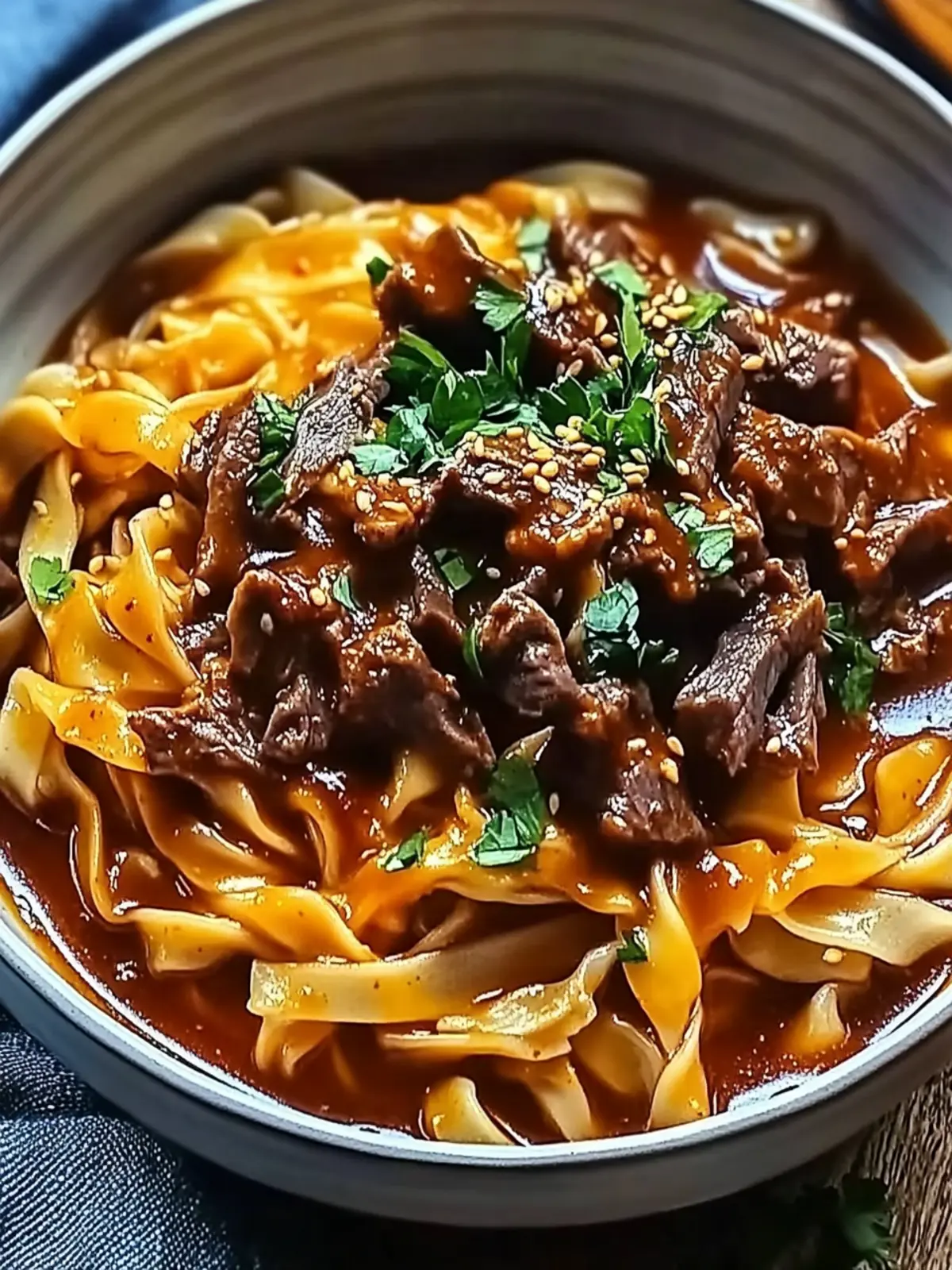
Why Are Korean Beef Noodles So Irresistible?
Comforting warmth: This slow-cooked meal wraps you in a blanket of flavor, making it the perfect remedy for a long day.
Easy prep: Just a quick mix of ingredients, and your slow cooker does the rest!
Savory sweetness: The harmony of soy sauce and brown sugar lends a unique depth that ll have you coming back for seconds.
Versatile goodness: Switch up proteins or add veggies effortlessly, tailoring it to your family s preferences.
Crowd-pleasing delight: Perfect for family dinners or gatherings, this dish is sure to impress everyone around the table!
Korean Beef Noodles Ingredients
For the Beef
Beef Chuck Provides rich flavor and tender texture after slow cooking; brisket is a great alternative for more marbling.
Black Pepper Adds mild heat; ensure even seasoning for uniform flavor throughout.
For the Broth
Beef Broth Forms the base of the sauce, enhancing depth; vegetable broth can lighten the meal if preferred.
Water Used to dilute the broth for the perfect consistency.
Soy Sauce Adds umami and saltiness; substitute tamari for a gluten-free version.
Brown Sugar Balances the salty soy sauce with sweetness; white sugar can be used as a swap.
Ginger (Minced) Infuses warmth and flavor; fresh ginger is ideal, but dried will work in a pinch.
Garlic (Minced) Deepens the savory profile; prefer fresh garlic for the best taste.
Sesame Oil Contributes a nutty aroma; olive oil can replace it, though some flavor will be lost.
Gochujang (Korean Chili Paste) Adds heat and complexity; sambal oelek can replace it if needed.
For the Noodles and Garnish
Noodles (Udon or Ramen) Serve as the carbohydrate base; rice noodles can be substituted for a gluten-free option.
Green Onions (for garnish) Adds a pop of freshness; red onion is a good alternative if you prefer.
Sesame Seeds (optional) Enhances presentation and adds crunch; can be omitted if desired.
Fresh Cilantro (optional) Introduces brightness; parsley makes a mild swap if cilantro isn t to your taste.
How to Make Korean Beef Noodles
Prepare Beef: Season the beef chuck pieces generously with black pepper, ensuring each piece is evenly coated for a robust flavor.
Mix Sauce: In a mixing bowl, combine the beef broth, soy sauce, brown sugar, minced ginger, minced garlic, sesame oil, and gochujang. Stir until the sugar fully dissolves, creating a flavorful sauce.
Slow Cooker Setup: Place the seasoned beef into the slow cooker and pour the prepared sauce over it, ensuring all the beef is submerged for even cooking.
Cook: Cover and set the slow cooker to low for 6-8 hours or high for 3-4 hours. Cook until the beef becomes tender and easily pulls apart.
Cook Noodles: About 15-20 minutes before you re ready to serve, prepare the noodles according to package instructions, drain well, and set aside.
Combine Ingredients: Once the beef is tender, gently stir in the cooked noodles, allowing them to soak up the savory broth and flavors for a few minutes.
Serve: Dish out the Korean Beef Noodles into bowls, and sprinkle with sliced green onions, sesame seeds, and fresh cilantro if desired for a pop of color and flavor.
Optional: Add a drizzle of sesame oil before serving for an extra touch of richness.
Exact quantities are listed in the recipe card below.
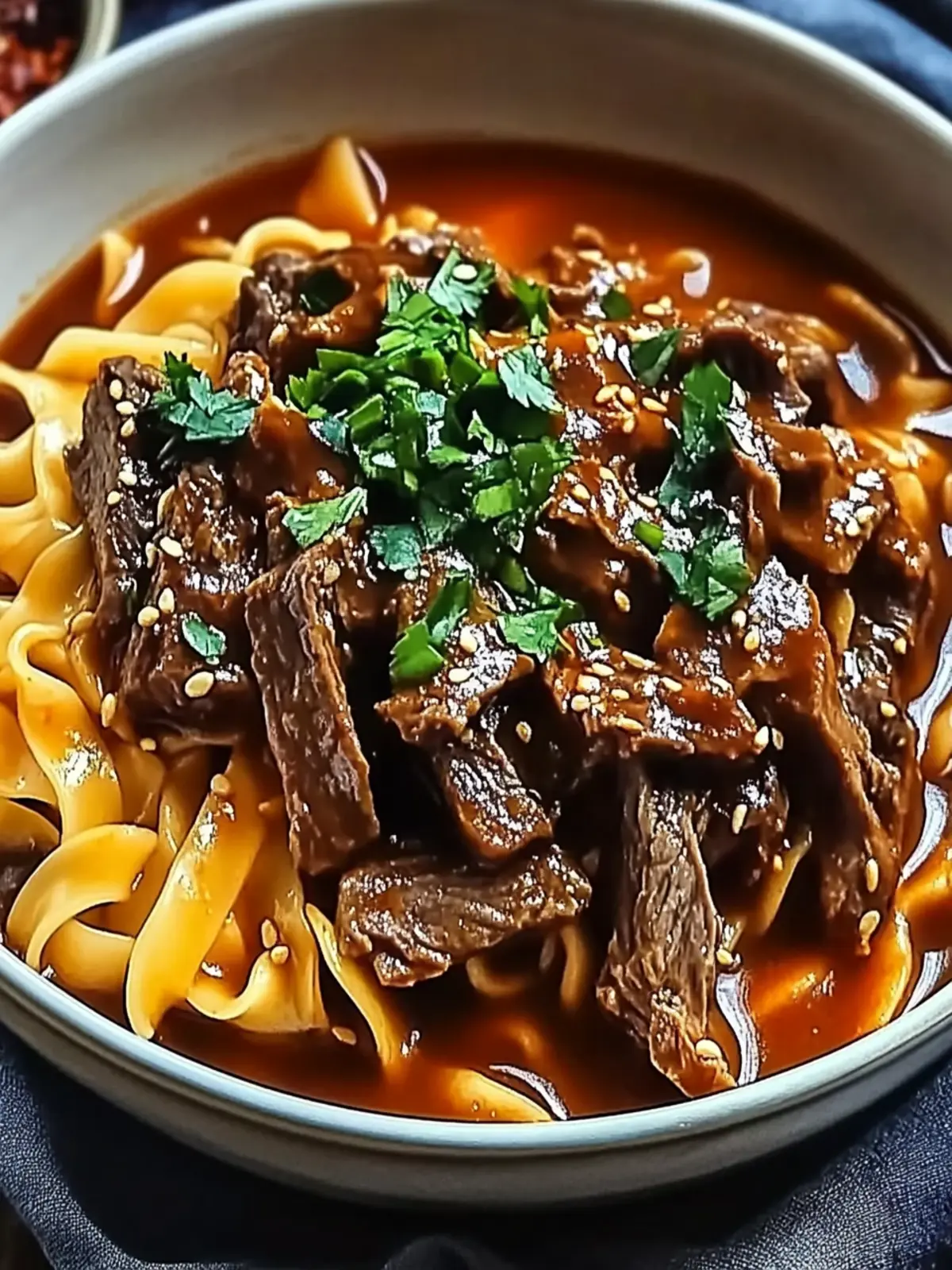
What to Serve with Korean Beef Noodles?
Elevate your dining experience with side dishes that complement the savory essence of this comforting meal.
Steamed Broccoli:
Bright green florets add a fresh crunch and vibrant color, while their mild taste balances the rich, savory noodles.Crispy Kimchi Pancakes:
These delightful, tangy pancakes introduce a crunchy texture and a kick of heat, creating a delicious play with the noodles. Perfect for dipping!Garlic Fried Rice:
Richly flavored with garlic, this dish provides an additional layer of satisfaction, soaking up the sauce left in your bowl beautifully.Pickled Vegetables:
The zesty tang cuts through the hearty flavors, adding brightness to your meal and a touch of traditional Korean flair.Miso Soup:
Warm and soothing, this light soup offers a contrast in texture, enhancing the dining experience with its umami depth.Lightly Spiced Cucumber Salad:
Crisp cucumbers tossed in a refreshing vinaigrette cool down the palate while adding a delightful, crunchy texture to the meal.
Savor these pairings for an unforgettable dinner that enchants both the senses and the soul!
Make Ahead Options
These Korean Beef Noodles are perfect for meal prep enthusiasts! You can season and brown the beef up to 24 hours in advance, allowing it to marinate in its flavors overnight in the refrigerator. Additionally, you can prepare the sauce by mixing the beef broth, soy sauce, brown sugar, ginger, garlic, sesame oil, and gochujang ahead of time, storing it in an airtight container in the fridge for up to 3 days. When you’re ready to enjoy your meal, simply combine the beef and sauce in the slow cooker and cook as directed. Finish by cooking the noodles approximately 15-20 minutes before serving, ensuring they stay perfectly chewy and absorb the delicious broth, making your Korean Beef Noodles just as delightful as if made fresh.
Korean Beef Noodles Variations
Customize your comforting bowl of Korean Beef Noodles with these delicious twists and turns!
- Protein Swap: Substitute beef with chicken thighs or tofu for a lighter, yet equally satisfying, dish.
- Veggie Boost: Toss in fresh vegetables like carrots, broccoli, or bell peppers in the last hour for added nutrition and color.
- Gluten-Free: Use rice noodles instead of udon or ramen to make this meal gluten-free without sacrificing flavor.
- Spice it Up: For extra heat, add more gochujang or incorporate some fresh sliced chili peppers right before serving.
- Nutty Flavor: Drizzle additional sesame oil just before serving to amplify the nutty aroma and richness of the dish.
- Coconut Cream: For a creamy hint, stir in a bit of coconut cream towards the end of cooking for a sweet and savory blend.
- Sweet & Savory: Mix in a few tablespoons of pineapple juice for a sweet twist that complements the savory notes beautifully.
- Herb Infusion: Experiment with fresh herbs like basil or mint as a garnish to refresh and elevate each bowl with new flavors.
How to Store and Freeze Korean Beef Noodles
Fridge: Store leftovers in an airtight container for up to 3 days. This keeps the flavors fresh and prevents spoilage.
Freezer: If you want to enjoy Korean Beef Noodles later, freeze them in a well-sealed container for up to 3 months. Consider portioning for easy reheating.
Reheating: When you’re ready to enjoy your dish, reheat gently on the stovetop or in the microwave, adding a splash of water or broth to maintain moisture.
Packaging Tips: Allow the noodles and beef to cool completely before freezing to prevent ice crystal formation. Keep garnishes separate for the best texture upon reheating.
Expert Tips for Korean Beef Noodles
- Cut Evenly: Ensure the beef is cut into uniform chunks for even cooking, resulting in tender bites throughout the dish.
- Noodle Resting: Allow the noodles to rest for a few minutes after cooking; this lets them absorb the delicious flavors of the broth.
- Thickening Sauce: If you prefer a thicker sauce, mix a cornstarch slurry and add it during the last hour of cooking for a satisfying consistency.
- Adjust Spice Levels: If you re sensitive to heat, start with less gochujang and adjust according to your preference when making Korean Beef Noodles.
- Flavorful Variations: Feel free to add vegetables like carrots or bell peppers towards the end of cooking for a nutritious twist to this comfort dish.
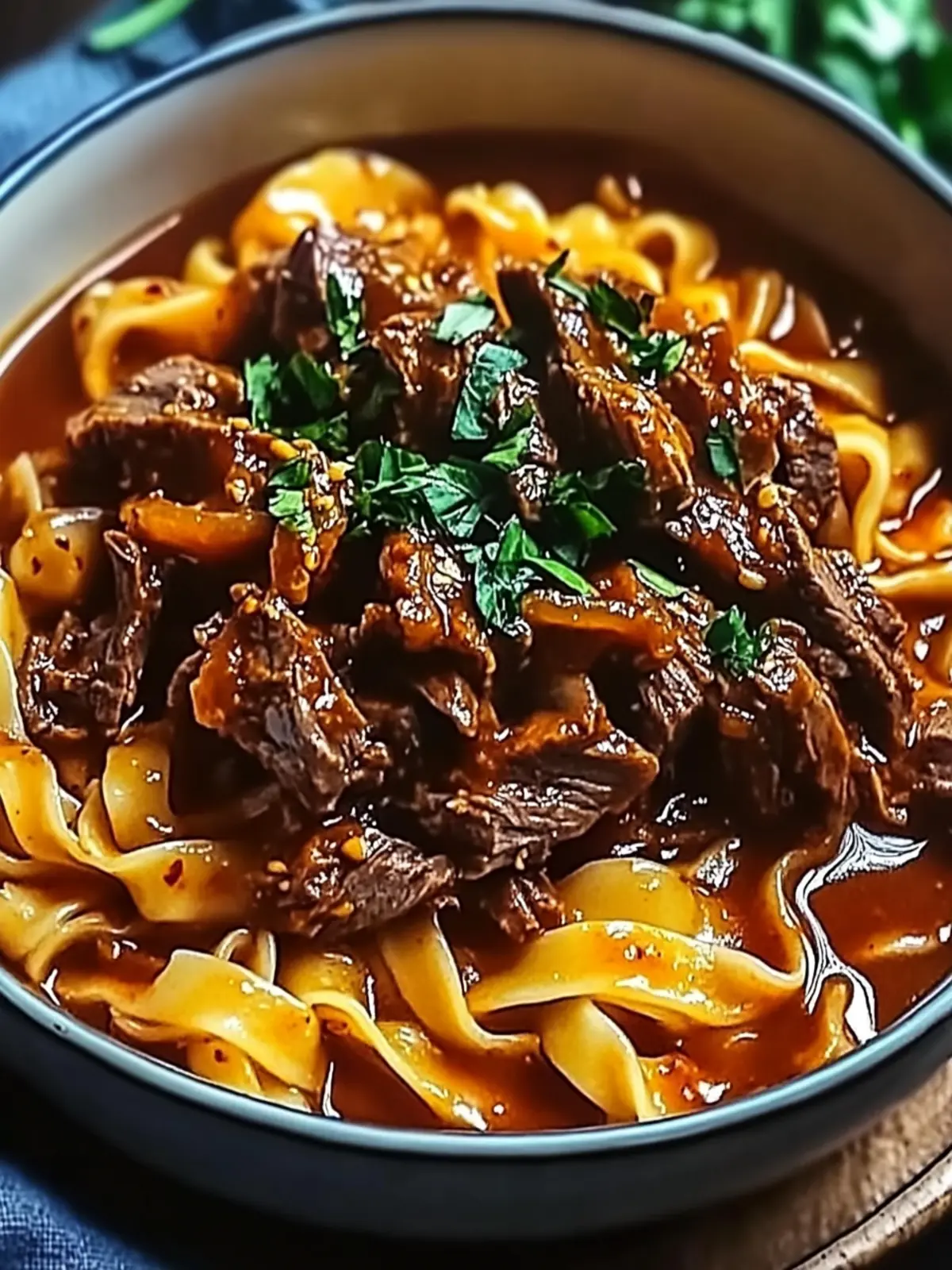
Korean Beef Noodles Recipe FAQs
What type of beef is best for Korean Beef Noodles?
Choosing beef chuck is perfect as it provides rich flavor and tender texture after slow cooking. If you desire a bit more marbling, brisket is a fantastic alternative. Both cuts become melt-in-your-mouth tender, adding depth to your dish.
How should I store leftovers?
After enjoying your meal, store any leftovers in an airtight container in the refrigerator. They will stay fresh for up to 3 days. When you’re ready to heat them up, simply warm gently on the stovetop or microwave, ensuring the dish doesn’t dry out by adding a splash of water or broth as needed.
Can I freeze Korean Beef Noodles?
Absolutely! If you plan to enjoy this comforting dish later, freeze the noodles and beef together in a well-sealed container for up to 3 months. When freezing, allow everything to cool completely to avoid ice crystals. For an easy reheating experience, separate your garnishes before freezing.
How can I adjust the spice level in my Korean Beef Noodles?
If you re sensitive to spice or want a milder flavor, start with a smaller amount of gochujang and taste as you mix. It’s easier to add more if needed than to dial back the heat. You can also use less spicy alternatives like sambal oelek if gochujang is too intense for your palate.
What should I do if my sauce is too thin?
If your sauce isn’t thickening to your liking, consider creating a cornstarch slurry. Mix 1 tablespoon of cornstarch with 2 tablespoons of cold water until smooth. Stir this mixture into your slow cooker during the last hour of cooking. This will help achieve that luscious, inviting sauce consistency you desire.
Are there any dietary considerations for Korean Beef Noodles?
Of course! For gluten-free options, swap soy sauce for tamari and choose gluten-free noodles, like rice noodles. If cooking for someone with allergies, always check ingredient labels. You can substitute protein with chicken thighs or tofu as well, making this dish versatile for diverse diets.